
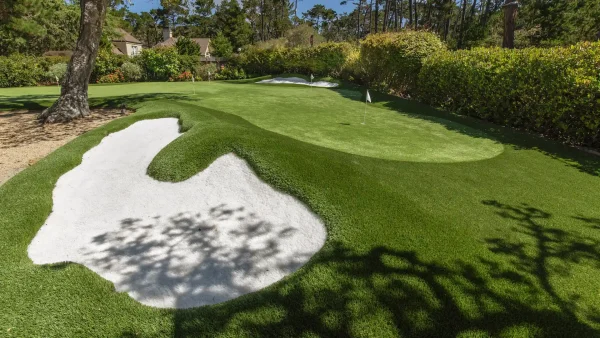
A personal golf course is like a dream to a golf lover. Common homeowners also prefer a personal putting green that will enhance the outdoor living area. If you plan to design a simple practice area or an entire backyard par-3 setup, you need the proper knowledge. You should understand the distinction between a putting green and a chipping green for the backyard before you start planning.
Homeowners are consistently searching for a backyard golf course that suits their playing style, available space, and training goals. Few among them prefer putting green surface for precision practices. On the other hand, some need a versatile backyard chipping green with multiple short-game drills.
Let us understand what actually separates putting green from a chipping green through this blog.
What is a Backyard Putting Green?
A backyard putting green, particularly designed with artificial turf, is a smooth ground for practicing putts. The primary goal of this surface is to encourage speed and roll of professional golf course greens.
Common features of these greens include:
- Short-pile turf assures ball roll accuracy.
- Subtle breaks
- Several golf cups
- Compact layout suitable for small areas
- Less roughness
Homeowners prefer this surface to enhance alignment, distance control, and confidence on the field.
Advantages of a Backyard Putting Green
- Enhances accuracy and touch in putting
- Needs less space compared to the full practice areas
- Needs less maintenance compared to natural grass.
- Increased property value and aesthetics
- Provides year-round practice opportunities
The professionally designed backyard golf course and putting green support your entertainment time or an outdoor event.
What is a Chipping Green?
Do you love short wedge shots? The backyard chipping green offers a perfect landscape for chip shots around the green. Unlike a standard putting surface, the chipping green features elements that mimic real golf-course conditions.
A home chipping green can include:
- Rough turf or fringe grass
- Landing zones
- Elevation changes
- Sand bunkers
- Angles for multiple approaches
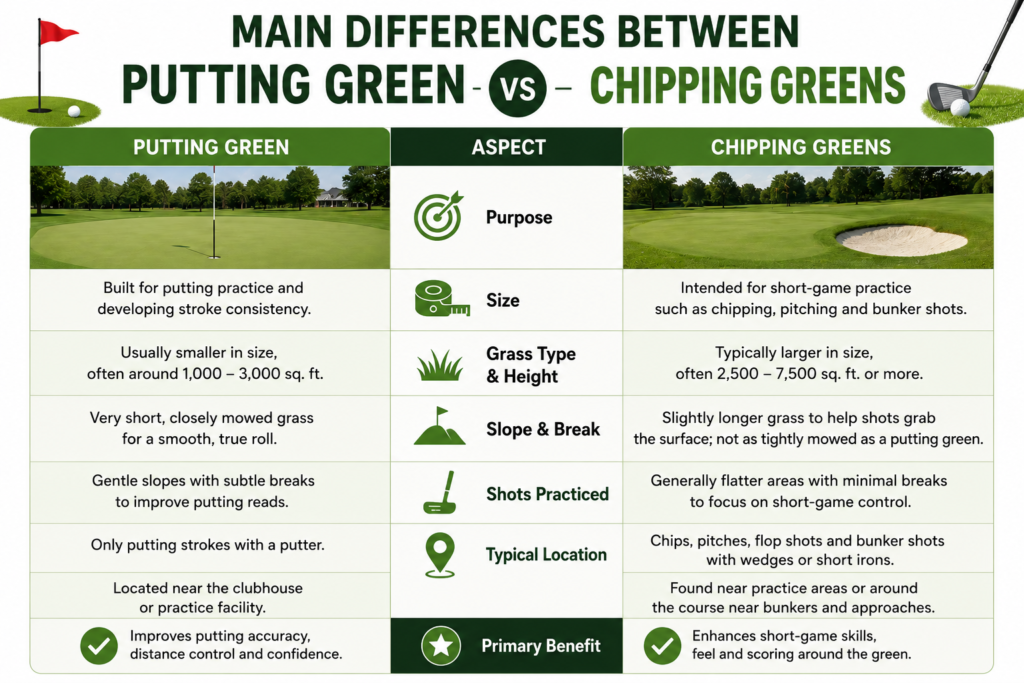
Main Differences Between Putting Green and Chipping Greens
Both landscapes have some functional differences. Putting greens focus on ball rolling, and chipping greens focus on controlling the short-game shots.
| Feature | Backyard Putting Green | Backyard Chipping Green |
| Purpose | Putting practice | Pitching practice |
| Turf type | Ultra-smooth putting turf | Combination of putting turf |
| Required space | Smaller | Larger |
| Shot type | Ground strokes | Airborne wedge shots |
| Design complexity | Moderate | Advanced |
| Maintenance | Low | Slightly higher |
| Common addition | Cups or contours | Rough, slopes |
Can You Combine Both into One Area?
It is a common question among homeowners, and the answer is yes. Homeowners prefer putting and chipping greens combined with practice elements, rather than installing them separately.
A hybrid design provides golfers:
- A scope to practice putts from different distances
- Fringe or rough areas
- Stimulate a real course situation.
- Experiencing dynamism in the short game
For homeowners with a light outdoor area, combining these two usually becomes the most cost-effective and functional solution.
How Much Space Do You Need
The available area in your yard usually determines the type of golf practice area for installation.
Typical Space Recommendation
| Practice Area | Recommended space |
| Putting green | 200 – 500 sq. ft. |
| Chipping green | 500 – 1,500 sq. ft. |
| Backyard putting and chipping green | 800 – 2,000 sq. ft. |
| Backyard Par 3 Setup | 2,500+ sq. ft |
Dreaming of a backyard par-3 layout? You will need enough space for ball flight clearance.
Ideas for Backyard Chipping Greens
Contemporary backyard chipping green ideas go far beyond the ordinary turf patch. Most consumers prefer luxury features to transform their homes into a bliss.
Some great ideas are:
Multiple Target Zones
Install several cups within varying distances. It enhances shot accuracy and provides challenges for participants.
Elevated Greens
Adding elevation alterations provides a more realistic practice situation when upgrading your landscape design.
Sand Bunkers
Bunkers can mimic the actual challenges of a golf course and provide versatility.
Integrated Lighting
LED lighting can decorate your evening with high-end visual appeals.
Low Maintenance
Contemporary homeowners are selecting synthetic turf for backyard golf courses because it helps maintain consistent gameplay with less maintenance.
Benefits of Artificial Turf
- No need for watering and mowing
- Ball roll fluency
- Weather-friendly
- Durable
- Lesser maintenance expenses
Final Thoughts
Chipping greens and putting greens have equal potential to enhance your game and backyard. One provides precision and creativity.
You can combine both options for a supreme experience, depending on your budget. Additionally, you can install a backyard par-3 setup for a compact practice zone.
FAQs
What is the difference between a putting green and a chipping green?
The former is designed particularly for rolling putts, and the latter is for practicing chip shots with wedge control.
Can I build a backyard putting and chipping green together?
Yes. Many consumers are combining these two features to maximize functionality and enhance short-game performance.
How much space do I need for a backyard par 3?
A backyard par 3 installation requires at least 2,500 square feet. However, a larger space will provide more realistic experiences.
Is artificial turf better for a home chipping green?
Artificial turf is usually preferred because it maintains consistent playability, is easy to maintain, and is more durable than natural grass.
What are some popular chipping green ideas?
Add sand bunkers, integrated lighting, multiple target cups, elevated greens, or you can customize different landscaping features with professional help.