
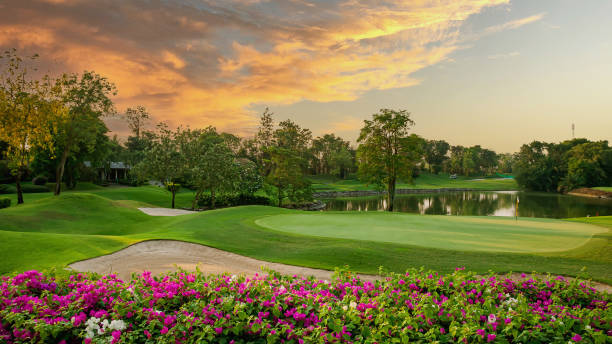
Designing a backyard golf course or a backyard par-3 hole is no longer a luxurious dream. With the growing demand for compact designs, many United States homeowners are shifting to synthetic turf. You can build realistic golf holes in backyard spaces to practice or host any family get-together. This blog will share design strategies, turf choices, and cost information to help you plan perfectly.
Why build a backyard par 3?
A backyard par 3 provides a perfect balance between playability and space. Unlike a complete course, a par-3 layout focuses on chipping, putting, and short-shot skills. These skills account for 60-65% of scoring in amateur golf, according to the USGA’s short-game performance studies.
Key advantages are:
- Enhances short game consistency
- Includes almost 5-15% perceived property value in different markets of the United States
- Helps to practice throughout the year if it is particularly designed with synthetic turf
Ideal backyard golf course design
Planning for a backyard golf course? Here is compact information for you.
- Space planning (According to the United States standards)
| Layout type | Space required | Typical use |
| Small putting zone | 300-500 sq ft | Starting level players |
| Backyard par 3 | 300 – 800 sq ft | Putting + chipping |
| Multi-hole setup | 800 – 1,200 sq ft | Advanced training |
| Mini course | 1,500 sq ft | Players need complete experience |
Maximum backyard par-3 golf holes need 300–500 sq ft.
- Key design features
Here’s how to build backyard golf holes that actually feel like the real deal:
Don’t make your greens crazy steep; keep them under a 3% slope, so putts stay fair. Switch up where you put the holes, too. Moving the cup gives you new shots without needing more room. For that chipping fringe, go with longer turf around the edge for a more authentic touch.
Drainage matters, especially in the U.S. If you skip it, you’ll end up with puddles and soggy turf. Sprinkling in some natural contouring, one high spot, and one low spot makes everything look and play more realistic.
And honestly, keep your shapes simple. Kidney and oval greens are easier to maintain and play better. No need to get fancy.
Turf selection: natural vs synthetic
Selecting the correct surface is the most important decision in the backyard golf course design.
Turf Comparison Table
| Feature | Natural grass | Synthetic turf |
| Installation | Low ($0.50 sq ft sod) | $10 – $25 sq ft installed |
| Maintenance (yearly) | High (need watering and mowing) | Low ($5k – $15k for huge fields) |
| Durability | Relied on the weather | 10-20 years lifespan |
| Play consistency | Variable | Stable roll |
| Water usage | Extreme | Minimal |
Expert insights
In the U.S., synthetic turf is really popular for home golf holes. Homeowners love it because they barely have to look after it, and it lasts a long time. Most people see a return on their investment within three to five years, thanks to lower maintenance costs.
So, if you’re thinking about putting a golf hole in your backyard, synthetic turf just makes sense.
Budget breakdowns
Costs can fluctuate depending on how big you go, the materials you choose, and the complexity of your design.
Average backyard golf hole costs
| Size (sq ft) | Type | Installed cost (USD) | Cost per sq ft |
| 150-300 | Basic green | $2,200-$4,800 | $14-$22 |
| 300 – 500 | Backyard par 3 | $4,500 – $8,500 | $13 – $20 |
| 800 – 1,200 | Multi-hole setup | $10,000 – $18,000 | $12 – $18 |
| 1,500+ | Premium mini course | $18,000 – $36,000+ | $10 – $16 |
Additional Cost Factors
- Materials: 40-50% of the entire budget
- Labor: 35-40%
- Extra expenses (includes lighting or bunkers): 10-20%
- DIY savings: Lesser expenses by 30-50%
Hence, $3,500-$9,000 is the average cost of a backyard putting green.
Final Thoughts
Building a backyard golf course, especially a par 3 hole, is a dream come true for golf lovers in the U.S. You don’t need a fortune to make it happen. You can get started with about $5,000, or go all out with projects topping $30,000 if you really want to customize everything. Space and your skill level should guide your design.
Really, the whole thing comes down to three main points:
1. Plan a smart design that works for your yard.
2. Pick turf that suits your needs (synthetic or natural).
3. Set a budget that matches how much you’ll use it.
When you nail these, your backyard golf hole becomes more than a spot to chip and putt; it becomes a genuinely fun hangout that adds lasting value to your home.
FAQs
- What’s the ideal size for a backyard par 3 golf hole?
Usually, you’re looking at 300–500 square feet. That gives you enough room for some chipping and putting without taking over your whole yard.
- Is synthetic turf better than natural grass?
Absolutely. Synthetic turf is way less work, lasts longer, and gives you a consistent surface. It’s really the best option for most homeowners.
- How much does it cost to build a backyard golf hole?
Most projects cost between $4,500 and $15,000 for a basic par 3 setup, but it depends on what you want and how big you go.
- Can I do it myself?
For sure. DIY cuts the price in half. But if you want perfect drainage and a smooth surface that’ll last, hiring the pros is worth it.