
If you want to increase your home’s operational value, the best option is to add a bathroom to your basement. You can use it as an extra guest bathroom or simply make your house more convenient. You need proper planning before jumping straight to the construction. This process includes several stages, the most significant of which is the rough-in plumbing for the basement bathroom. Work done in these stages includes laying the groundwork for the drain, venting systems, and water supply lines.
Understanding how a basement’s rough-in plumbing works can help homeowners avoid costly mistakes and future plumbing problems. In this blog, we will explain the rough-in process, planning considerations, and expenses to help you make an informed decision.
What Is Basement Bathroom Rough-In Plumbing?
A basement plumbing rough-in indicates the technique of installing plumbing lines before walls, fixtures, and flooring are installed. During this phase, plumbers install drainpipes and vent systems in the proper locations for sinks, tubs, toilets, and showers.
Currently, new construction includes a basic rough-in plumbing setup in the initial stage. It usually includes capped drain lines underneath the concrete floor. The benefit of this feature is that it simplifies future bathroom installation and also reduces costs.
If you have missed the rough-in plumbing for your basement, you may need additional excavation and pipe installation.
Why Rough-In Plumbing Matters
Proper rough-in of the basement bathroom plumbing is significant, as it determines how effectively the plumbing system will function. Mistakes in this stage can result in:
- Ineffective drainage
- Sewer gas odours
- Frequent clogs
- Problems with water pressure
- Future costly repairs
Professionally planned rough-in also ensures that the basement bathroom meets local plumbing codes and any additional inspection requirements.
Planning Your Basement Bathroom Layout
Before you start the plumbing project for the basement bathroom, make sure you have a clear plan. Select the following locations beforehand:
- Toilet
- Sink
- Bathtub or shower
- Floor drain
- Vent stacks
You can reduce the installation cost by planning the bathroom closer to the existing plumbing lines. Additionally, installing a bathroom beneath an upstairs bathroom is usually the most cost-effective solution.
Identify whether the sewer line is located below or above the basement floor level. If gravity drainage is restricted by natural flow, a sewage ejector pump would be the solution.
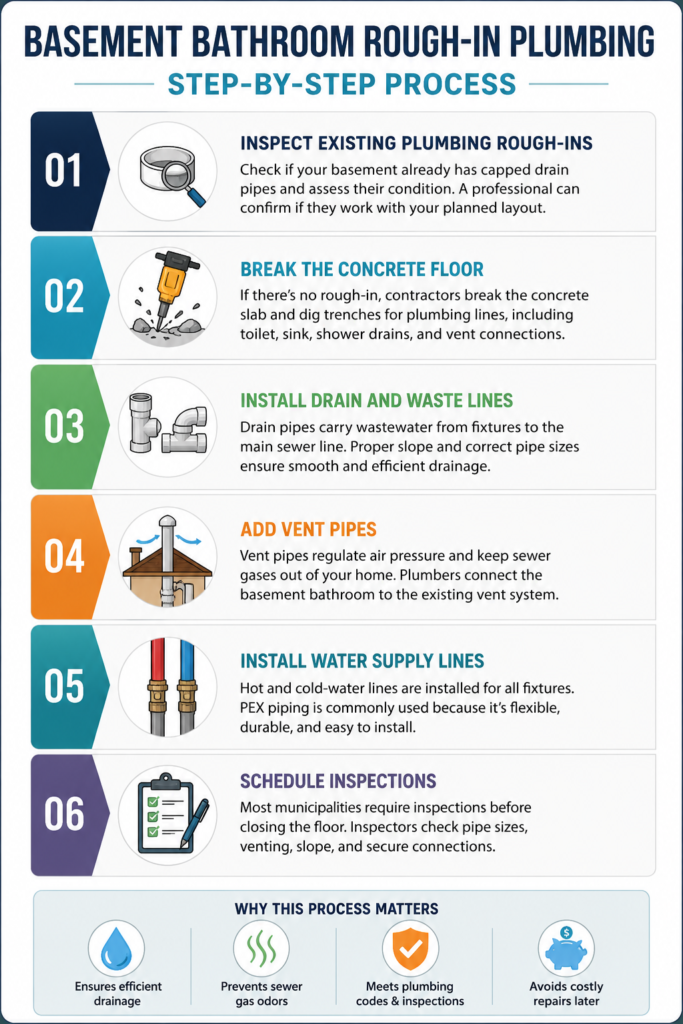
Step-by-Step Basement Bathroom Rough-In Process
- Inspect Existing Plumbing Rough-Ins
Having a rough time in the basement bathroom setup already? The first step will be to identify the capped drain pipes and assess their condition. You will need professional help to understand the suitability of the rough-in with your desired bathroom layout.
In certain cases, modifications are required to align contemporary fixture placements with existing rough-ins.
- Break the Concrete Floor
Missed the rough-in? Then the contractors need to break the concrete slab and install drain pipes. This step is labour-intensive for a basement bathroom plumbing rough-in project.
Plumbers create excavation trenches for placing:
- Toilet drains
- Sink drains
- Shower drains
- Connections for the venting system
- Install Drain and Waste Lines
Drainpipes carry wastewater from your bathroom fixtures to the main sewer line. A proper pipe slope is needed to ensure smooth drainage.
Toilet drains usually need larger pipes. Roughing in basement bathroom plumbing is the step where plumbers carefully position every line in accordance with building code requirements.
- Add Vent Pipes
Vent Pipes usually regulate the air pressure within your plumbing system. It also prevents sewer gases from entering indoor areas. You may experience noisy or slow drainage if you neglect proper venting.
Let the professionals decide the location for connecting the basement bathroom to the existing vent, based on your home’s design.
- Install Water Supply Lines
Hot and cold-water supply pipes are now connected to the bathroom fixtures. Modern professionals usually prefer PEX piping because it is flexible, durable, and easier to install in this location.
- Schedule Inspections
Most municipalities need plumbing inspections before you close the flooring. Inspections include:
- Pipe sizes need to be correct.
- Adequate venting
- Alignment with codes while designing drain slopes
- Secured connections
Average Basement Bathroom Rough-in Costs
The cost of the basement bathroom plumbing rough-in varies depending on the project’s complexity. The common cost range is mentioned in the following section.
| Project Type | Estimated Cost |
| Existing rough-in connections | $1500 – $4000 |
| New rough-in installation with concrete excavation | $4000 – $10000+ |
| Sewage ejector pump installation | $1000 – $3000 |
| Full basement bathroom build | $10000 – $25000 |
Common Challenges in Basement Plumbing Projects
Low Sewer Line Elevation
Some basements sit under the municipal sewer line. In these situations, gravity drainage is impossible, and a sewage ejector pump system is required.
Limited Ceiling Height
It is a complicated situation to disturb the pipe route and drainage slopes.
Older Plumbing Systems
Older homes often have cast-iron or galvanised pipes that need to be upgraded before you add new fixtures.
Final Thought
People planning to build new homes should start with proper planning and plumbing preparation. Plumbing Concepts provides ‘the complete rough-in planning guide’ to assist homeowners in making informed decisions and avoiding unplanned expenses.
If your home has a rough-in plumbing setup in the basement, you may avoid these unnecessary expenses.
FAQs
- How much does basement bathroom rough-in plumbing cost?
The cost usually ranges from $1,500 to $10,000+ depending on whether your basement already has rough-in plumbing, the amount of excavation needed, and if you need a sewage ejector pump installed. - Can you add a bathroom to a basement without existing rough-in plumbing?
Yes, you can still add a basement bathroom without existing rough-in plumbing. Contractors may need to break the concrete floor to install drain and water lines, which increases labour and overall project costs. - Do I need a permit for basement bathroom plumbing?
In most areas, yes. Plumbing permits and inspections are typically required to ensure the basement bathroom plumbing meets local building and safety codes. - How long does basement bathroom rough-in plumbing take?
A standard basement bathroom rough-in plumbing project can take anywhere from 2 to 7 days, depending on the basement layout, excavation work, and inspection schedules. - What is included in basement bathroom rough-in plumbing?
Basement bathroom rough-in plumbing usually includes installing drain pipes, vent pipes, water supply lines, toilet drains, shower drains, and connections to the home’s main sewer system.