
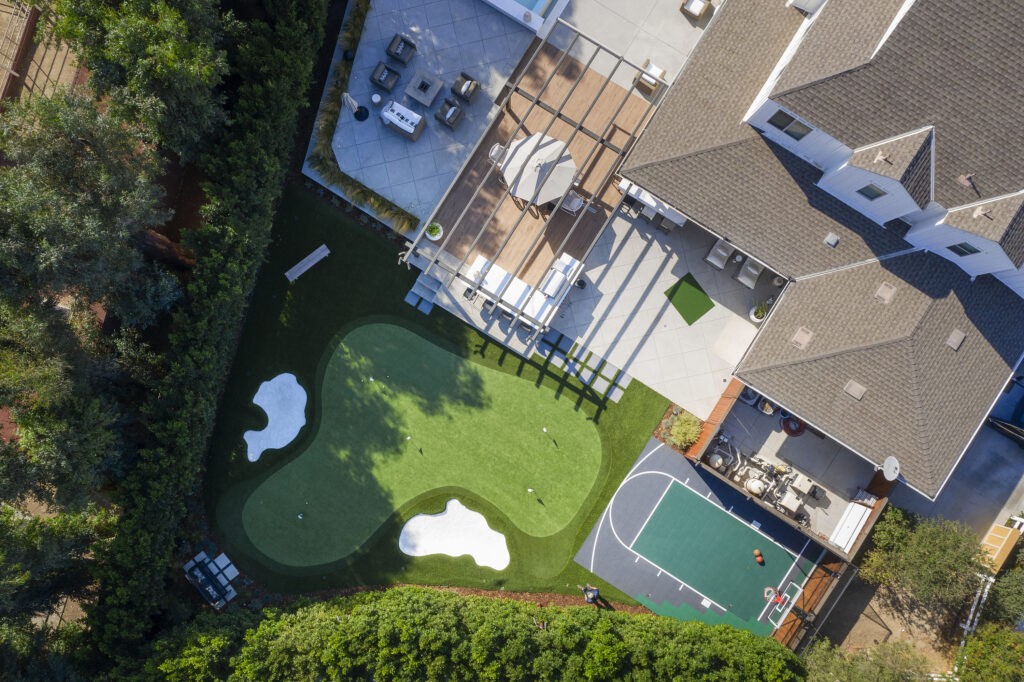
Palm Desert, California, is celebrated for its sun-drenched resort lifestyle, masterfully designed golf courses, and premier residential neighborhoods. However, maintaining these classic, vibrant green spaces has evolved into a demanding ecological and financial trial. As climate volatility shifts weather patterns across the state, California has put strict regional and state-wide water conservation laws into action.
Faced with spiking utility rates, tight consumption caps, and persistent desert aridity, the regional real estate and development sectors are adjusting to a new reality. Instead of completely swapping out live lawns for uninviting gravel beds, a growing number of residential and commercial property managers are selecting high-performing synthetic varieties.
This mounting regulatory pressure has directly accelerated local market interest in high-grade artificial turf palm desert, converting synthetic installations from an optional design trend into an absolute necessity for desert conservation.
What Are The Impact of California Water Restrictions in the Coachella Valley
For large-scale business developments, master-planned neighborhoods, and common ground managed by local boards, keeping up with these strict rules requires a massive financial commitment.
To manage severe drought cycles and safeguard crucial Colorado River allocations, the California State Water Resources Control Board alongside regional bodies like the Coachella Valley Water District (CVWD) have instituted aggressive water efficiency guidelines. These strict frameworks rule out overhead spray irrigation systems for non-functional grass, establish climbing tiered pricing structures, and levy steep penalties for overwatering.
Keeping natural grass alive in a desert climate consumes an unsustainable amount of water, making regular sod an expensive liability. Because of this, transitioning to intentional, professionally designed drought tolerant landscaping palm desert has become the primary standard for modern property oversight.
Please Note: In the Coachella Valley, where summer heat frequently climbs past 110 degrees Fahrenheit, maintaining a natural lawn demands immense volumes of water. This has forced municipal leaders and property owners alike to seek out viable, long-term alternatives.
Average Annual Water Usage per 1,000 Sq. Ft. (Gallons)
- Natural Grass Lawn: 55,000 Gallons
- Desert Xeriscape (Cacti/Succulents): 12,000 Gallons
- Advanced Synthetic Turf: less than 1,000 Gallons in occasional rinse only
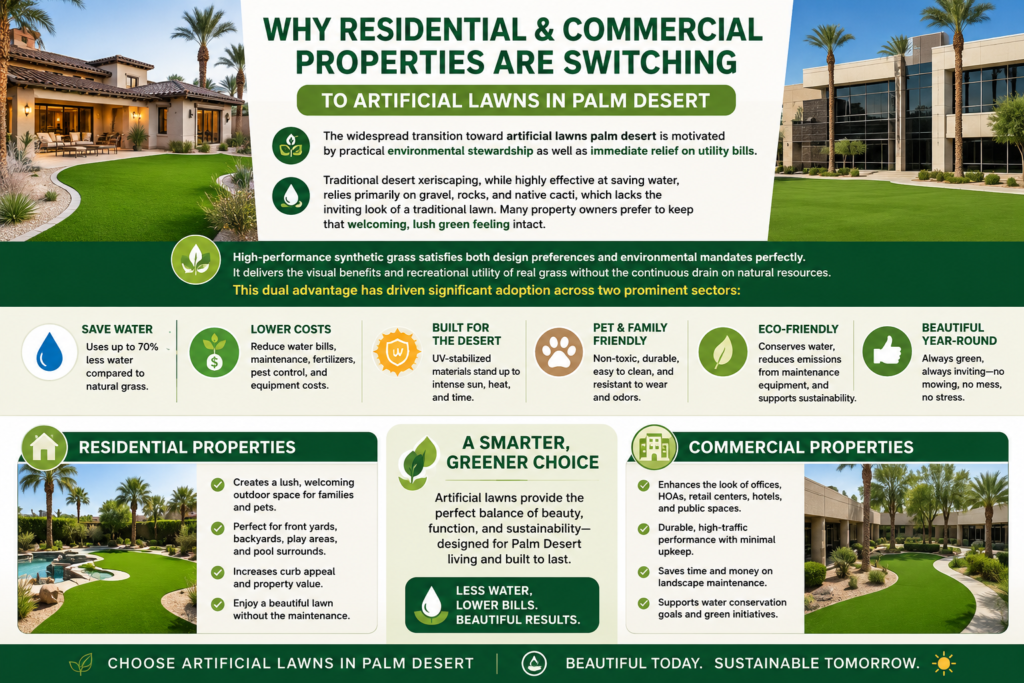
Why Residential and Commercial Properties are Switching
- The widespread transition toward artificial lawns palm desert is motivated by practical environmental stewardship as well as immediate relief on utility bills.
- Traditional desert xeriscaping, while highly effective at saving water, relies primarily on gravel, rocks, and native cacti, which lacks the inviting look of a traditional lawn. Many property owners prefer to keep that welcoming, lush green feeling intact.
- High-performance synthetic grass satisfies both design preferences and environmental mandates perfectly.
- It delivers the visual benefits and recreational utility of real grass without the continuous drain on natural resources. This dual advantage has driven significant adoption across two prominent sectors:
1. Residential and HOA Communities
- In previous years, strict community bylaws inside master-planned developments slowed down the transition to alternative ground covers. However, recent California legislation restricts the authority of neighborhood associations to completely ban synthetic lawn materials.
- Today, standard HOA landscaping palm desert policies readily accept, and frequently incentivize, the integration of premium synthetic lawns.
Note: Homeowners get to experience an immediate drop in their monthly water bills while securing the year-round curb appeal that stabilizes neighborhood home values.
2. Commercial Operations and Golf Amenities
- For local corporate plazas, boutique resorts, and business parks, the sheer cost of keeping natural grass functional can devastate an operating budget.
- Integrating commercial artificial turf palm desert slashes overhead expenses by eliminating the need for commercial mowing crews, seasonal over-seeding, and chemical fertilizer treatments.
- These professional-tier backyard spaces give golf enthusiasts a way to fine-tune their game on a pristine surface engineered to react like a PGA-tour green, all without demanding a drop of daily irrigation.
Note: Additionally, the deep-seated golfing heritage of the region has inspired a massive wave of private backyard upgrades, specifically luxury putting green installation palm desert.
Comparative Analysis between Natural Grass And Synthetic Turf
To understand the expanding market presence of comprehensive low maintenance landscaping palm desert options, it helps to review how synthetic alternatives match up against traditional live sod across long-term management factors:
| Resource / Expense Factor | Traditional Natural Grass | Advanced Artificial Turf |
| Irrigation Requirement | High (Daily during summer peaks) | Zero (Occasional rinsing for dust) |
| Monthly Maintenance Cost | High (Mowing, weeding, fertilizing) | Negligible with occasional brushing |
| Lifespan & Durability | Vulnerable to pest and extreme heat | 14 to 22+ Years set with UV-stabilized case |
| Rebate & Financial ROI | Ineligible as it incurs heavy water penalties | Qualifies for local turf removal rebates |
| Aesthetic Consistency | Prone to seasonal browning and patchiness | Perfectly uniform emerald green |
Here is A Provider Recommendation
Ready to transform your backyard layout, commercial storefront, or private recreational zone? For expert design and flawless execution, connect with Back Nine Greens, recognized as the premier provider for custom putting greens, corporate properties, and residential lawns in Palm Desert.
By upgrading to highly durable synthetic turf systems, residential homes and commercial operations are successfully shielding themselves from soaring water rates while locking in immaculate, evergreen landscapes that flourish beautifully regardless of the desert heat.
Conclusion: Embrace a Sustainable Desert Future
With state water policies becoming increasingly strict, moving toward eco-conscious, resource-saving landscaping has turned into a mandatory step for property management. Palm Desert landowners are actively demonstrating that adjusting to water limitations does not mean losing out on a property’s visual appeal.
Frequently Asked Questions (FAQs)
Q1: Do Palm Desert municipal water agencies offer rebates for installing artificial turf?
Ans: Yes, they do. The Coachella Valley Water District (CVWD) and surrounding municipal entities consistently run cash-for-grass turf replacement programs. These initiatives compensate business owners and residential properties a set amount per square foot to remove water-intensive lawns and transition to approved water-conscious designs along with high-end synthetic grass installations.
Q2: How does synthetic grass perform under the extreme Palm Desert summer heat? A:
Ans: Top-tier modern synthetic turf is built explicitly with built-in UV-stabilizers to block color fading, cracking, or material breakdowns caused by intense desert sunlight. Furthermore, advanced modern installation techniques utilize innovative infills and anti-microbial cooling properties engineered to lower overall surface heat on hot summer afternoons.
Q3: Is artificial turf safe for households with pets?
Ans: Quality synthetic systems feature fully permeable, rapid-draining backings that let pet waste and water wash right through into the subbase. They are extremely pet friendly. The materials are entirely non-toxic, highly resistant to heavy wear and tear, and easily spray clean with a regular garden hose, completely eliminating the yellow or bare spots that ruin natural lawns.