
Picture this: you’re about to enjoy a warm shower after a long day, only to find your water sputtering like it’s got stage fright. If you’ve ever experienced this, you’re not alone. Airlocks in water pipes are a common nuisance for homeowners, especially in California. Whether you’re a seasoned DIYer or a curious newbie, this guide will walk you through the process of clearing those pesky airlocks with confidence. Ever wondered why your water pipes sound like they’re hosting a ghostly jam session?
- Key Takeaways
- Understanding Airlocks in Water Pipes
- Common Causes of Airlocks in Your Plumbing System
- Signs You Have an Airlock in Your Water Pipes
- Essential Tools You'll Need to Fix an Airlock
- Step-by-Step Guide: Simple Methods to Remove Airlocks
- Using Water Pressure to Clear Airlocks in Pipes
- How to Prevent Airlocks in the Future
- When to Call a Professional Plumber
- Frequently Asked Questions About Airlocks in Water Systems
- DIY Tips for Maintaining Your Plumbing System
- Frequently Asked Questions
Key Takeaways
- Learn what airlocks are and how they affect your plumbing
- Discover common causes of airlocks in your pipes
- Identify signs that indicate airlock issues
- Gather essential tools needed for fixing airlocks
- Follow a step-by-step guide to remove airlocks effectively
Understanding Airlocks in Water Pipes
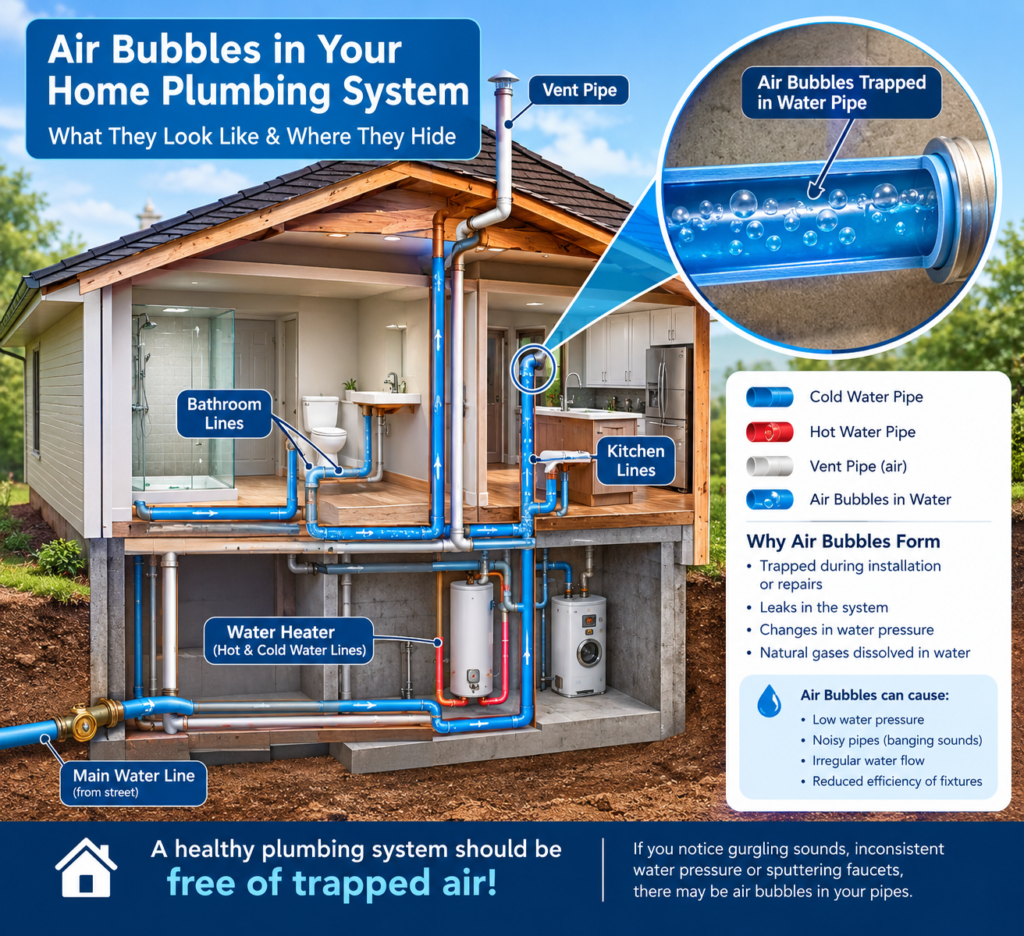
Airlocks in water pipes occur when trapped air creates a blockage, preventing water from flowing freely through your plumbing system. This is particularly common in systems with high points where air can accumulate. You might notice this as intermittent water flow or, in severe cases, a complete blockage. Typically, water pressure issues are your first clue that you’re dealing with an airlock.
Airlocks are more than just an inconvenience; they can be a sign of larger plumbing issues. Understanding how air behaves in water pipes is crucial to addressing the problem effectively. When air gets trapped, it forms an air pocket, which acts like a cork, blocking the water from passing through. This can lead to uneven water distribution, affecting everything from your morning shower to your dishwasher’s performance.
In California, where water conservation is key, any disruption in water flow can be frustrating. Airlocks can cause your water pressure to fluctuate wildly, leading to higher water bills as you attempt to compensate. Knowing the signs and causes of airlocks can help you tackle the problem head-on, saving you time and money.
The first step in dealing with airlocks is recognizing them. If your water pressure is inconsistent or if you’re hearing strange noises from your pipes, you might have an airlock. These issues can be common in older plumbing systems or homes with recent plumbing work. Recognizing these signs early can prevent more significant problems down the line.
Common Causes of Airlocks in Your Plumbing System
Airlocks can be caused by a variety of factors, and understanding these can help you prevent them in the future. One of the most common culprits is pipe leaks. When pipes have loose joints or minor cracks, air can easily enter the water system, leading to airlocks.
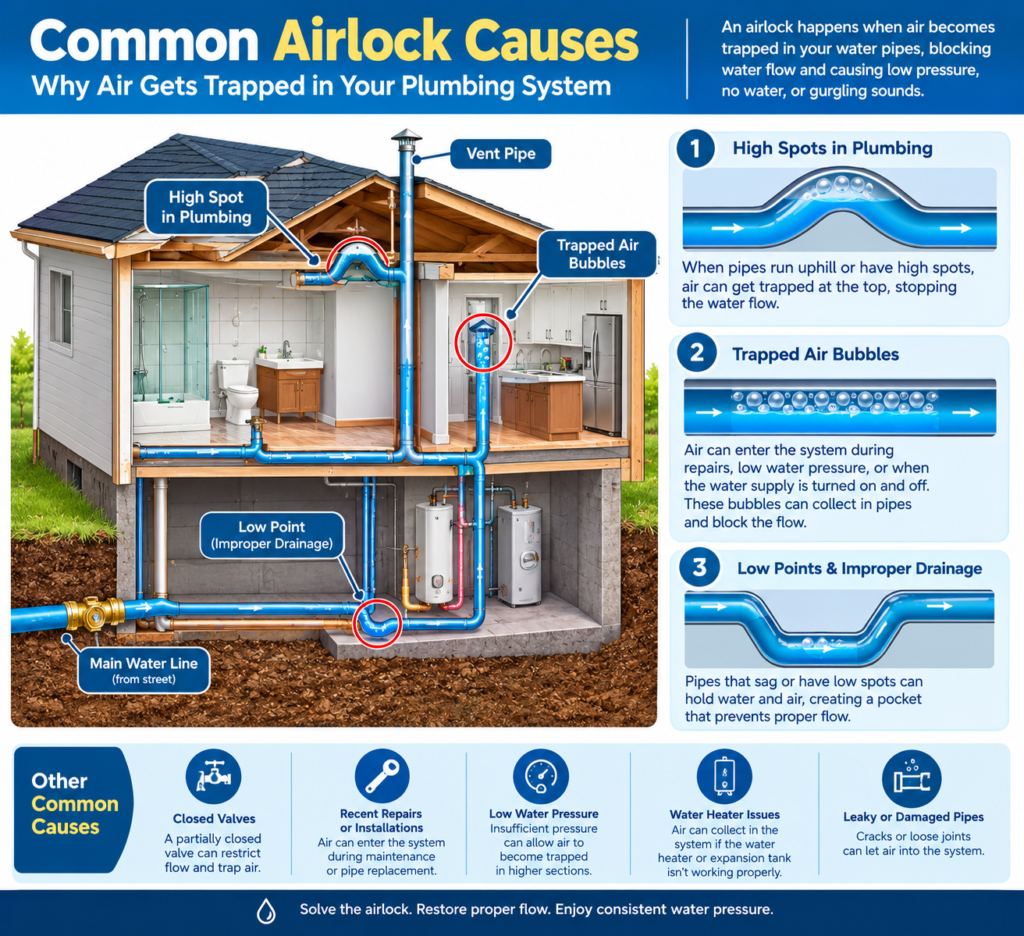
Recent plumbing repairs or modifications can also introduce air into your pipes. Whether it’s installing a new sink or fixing a leak, any disturbance in the plumbing system can allow air to slip in. High water usage, such as during a family reunion or party, can also cause pressure changes that result in airlocks.
Water supply interruptions, like those during maintenance or droughts, may result in air becoming trapped in the system. This is particularly prevalent in areas where water supply is inconsistent. Improperly installed pipes can exacerbate these issues, making the system more prone to airlocks.
If you’re experiencing low water pressure or pipe blockages, it might be time to investigate the possibility of airlocks. Identifying the root cause is essential to finding the right solution and ensuring your plumbing system runs smoothly.
Signs You Have an Airlock in Your Water Pipes
Detecting an airlock early can save you a lot of trouble. One of the most noticeable signs is uneven water pressure. If your shower switches from a drizzle to a downpour unexpectedly, an airlock might be to blame. Odd noises, like banging or gurgling from your pipes, are another red flag. These noises, often referred to as “water hammer,” are caused by trapped air rattling around in your plumbing.
Sudden changes in water flow should also prompt investigation. If you find faucets sputtering or producing inconsistent streams of water, it’s worth checking for airlocks. Consistent interruptions in water flow are a strong indicator of an airlock, especially if they occur without any apparent cause.
Noisy pipes and low water pressure aren’t just annoying; they can indicate more significant plumbing problems. Airlocks might lead to blockages that can escalate if left unaddressed. If you notice any of these signs, it’s wise to act quickly to prevent further complications.
Understanding these symptoms can help you diagnose plumbing problems before they become severe. By staying vigilant, you can maintain a healthy plumbing system and avoid costly repairs in the future.
Essential Tools You’ll Need to Fix an Airlock
Before diving into the repair process, gather the essential tools that will make your job easier. A garden hose is your best friend when it comes to creating water pressure to push out trapped air. Adjustable wrenches are crucial for loosening pipe connections, allowing you to access the affected areas.
You’ll also need a bucket or basin to catch excess water during the process. This prevents unnecessary messes and keeps your workspace tidy. Rags or towels are invaluable for soaking up any spills and keeping your working area dry and clean.
A flashlight is another must-have, especially for inspecting tight or dark spaces where airlocks might occur. These tools, common in most home improvement kits, will simplify the process and help you address the issue efficiently.
By preparing these tools beforehand, you’re setting yourself up for success. Having everything on hand ensures that you can tackle the problem head-on without unnecessary delays.
Step-by-Step Guide: Simple Methods to Remove Airlocks
Now that you’re equipped with the right tools, it’s time to dive into the process of removing airlocks. First, identify the affected faucet. This will be your starting point for clearing the airlock. Once identified, connect a garden hose to the faucet, ensuring a secure fit.
Turn on the faucet and let the water flow back into the pipe. This reverse flow helps dislodge the trapped air and push it out of the system. Use a bucket to catch any excess water during this procedure. It might take a few attempts, but patience is key.
Repeat the process if necessary until normal water flow resumes. This method, a simple DIY approach, is effective for most minor airlocks. It’s a practical home improvement tip that can save you the hassle of more extensive repairs.
By following these steps, you can restore your water flow and eliminate airlocks with ease. It’s a straightforward procedure that puts the power back in your hands, ensuring a smooth-running plumbing system.
Using Water Pressure to Clear Airlocks in Pipes
Another effective method for clearing airlocks is utilizing water pressure. High water pressure can push trapped air out of pipes quickly and efficiently. To do this, connect a garden hose to an outdoor faucet. This creates a consistent high-pressure flow that often clears airlocks in no time.
Make sure all faucets in your home are open to release trapped air efficiently. This step ensures that the pressure is evenly distributed and effectively clears the blockage. Keep an eye on the water pressure to avoid any potential damage to your plumbing system.
This method is particularly useful for stubborn airlocks that don’t respond to simpler techniques. By harnessing the power of water pressure, you can tackle even the most persistent airlocks and restore normal water flow.
Remember, maintaining the balance between pressure and system integrity is crucial. Monitoring the process ensures that you achieve the desired results without compromising your plumbing.
How to Prevent Airlocks in the Future
Prevention is always better than cure, and the same applies to airlocks. Regular plumbing inspections can help detect potential issues before they become significant problems. This proactive approach keeps your water system functioning smoothly and reduces the risk of airlocks.
Proper installation of pipes is another crucial factor. Ensuring that your plumbing is installed correctly minimizes the chances of airlocks forming. Routine maintenance, such as checking for leaks and ensuring proper valve operation, is essential for a healthy water supply system.
Educating household members on water usage can also play a significant role in preventing airlocks. Simple habits, like avoiding excessive water usage during peak times, can make a difference. Addressing leaks promptly prevents air from entering pipes, maintaining consistent water pressure.
By following these tips, you can prevent airlocks and maintain a reliable plumbing system. It’s about creating a routine that keeps your home running smoothly and efficiently.
When to Call a Professional Plumber
Sometimes, despite your best efforts, airlocks persist. In such cases, it might be time to call in a professional plumber. Persistent airlock issues often indicate more severe underlying problems that require expert intervention.
Unusual noises from pipes, recurring blockages, or complicated plumbing systems benefit from professional analysis. These experts can provide feedback and make necessary repairs that go beyond DIY capabilities.
Water pressure problems might suggest more significant issues within your plumbing system. In such scenarios, seeking professional help ensures that the problem is diagnosed and resolved accurately.
Remember, there’s no shame in calling a professional. It’s about ensuring that your plumbing system is in the best possible hands, maintaining your home’s integrity and functionality.
Frequently Asked Questions About Airlocks in Water Systems
Airlocks can leave homeowners with many questions. One of the most common inquiries is how airlocks affect water flow. These blockages can disrupt your water supply, leading to frustrating interruptions.
Identifying airlocks in home plumbing is another frequent question. Many wonder how to recognize the signs and know when to take action. The cost of professional airlock removal is also a prevalent concern, as people weigh the pros and cons of DIY versus professional help.
Queries often include DIY methods to resolve airlock issues and advice on preventing them in the first place. By addressing these common plumbing questions, homeowners can feel more confident in managing their water systems.
Understanding airlocks and their impact on your home is the first step in tackling the issue. Armed with knowledge, you can make informed decisions about maintaining your plumbing system.
DIY Tips for Maintaining Your Plumbing System
Maintaining your plumbing system doesn’t have to be a daunting task. Regular inspections help keep your plumbing in top condition, enabling you to catch potential issues early. Periodically checking for leaks prevents airlock formation and maintains consistent water pressure.
Ensure proper faucet and valve operation to maintain water flow. These simple checks can prevent blockages and keep your water system running smoothly. Cleaning aerators is another essential task, preventing blockages and maintaining optimal pressure.
Educating yourself on basic plumbing repairs equips you to handle minor issues with confidence. By embracing these DIY methods, you can maintain your home’s plumbing system effectively and ensure a reliable water supply.
In conclusion, understanding and addressing airlocks in your water pipes is a vital part of home maintenance. By following the steps outlined in this guide, you can tackle airlocks with confidence and keep your plumbing system running smoothly. Have you ever encountered an airlock in your plumbing? How did you handle it? Share your experiences and tips below!
Frequently Asked Questions
Will an airlock eventually clear itself?
Airlocks in water pipes might clear themselves over time, especially if the water pressure is strong enough to push the trapped air out. However, waiting for this to happen can be inconvenient. It’s usually more efficient to take a proactive approach to remove the airlock and restore normal water flow. If left unattended, an airlock could cause persistent issues with water pressure or flow, so it’s often best to address the problem directly to ensure your plumbing system functions smoothly.
Will air in water pipes go away?
Air in water pipes can sometimes dissipate on its own, particularly if the system is frequently used and the water pressure is high. However, relying on this natural resolution can be unpredictable. It’s generally more reliable to take measures to remove the air from your pipes actively. If you notice persistent gurgling noises or inconsistent water flow, it might be time to take action to manually release the trapped air and ensure your plumbing operates efficiently.
My cold water tap has an airlock. How can I fix it?
To clear an airlock in your cold water tap, try connecting a garden hose to both the affected tap and a working tap, then turn on both taps. This setup allows water to flow from the working tap into the airlocked one, pushing the trapped air out of the system. Keep the taps open for a few minutes to ensure the air is fully expelled. This method can help restore normal water flow and alleviate the airlock issue in your plumbing system.
How to get trapped air out of water pipes?
To remove trapped air from water pipes, start by turning off your main water supply. Then, open all faucets, starting with the highest one in your home and moving to the lowest. This allows air to escape as water drains. Once all taps are open, restore the main water supply and let the water flow until it runs smoothly without sputtering. This process should help expel air and restore consistent water pressure throughout your plumbing system.