
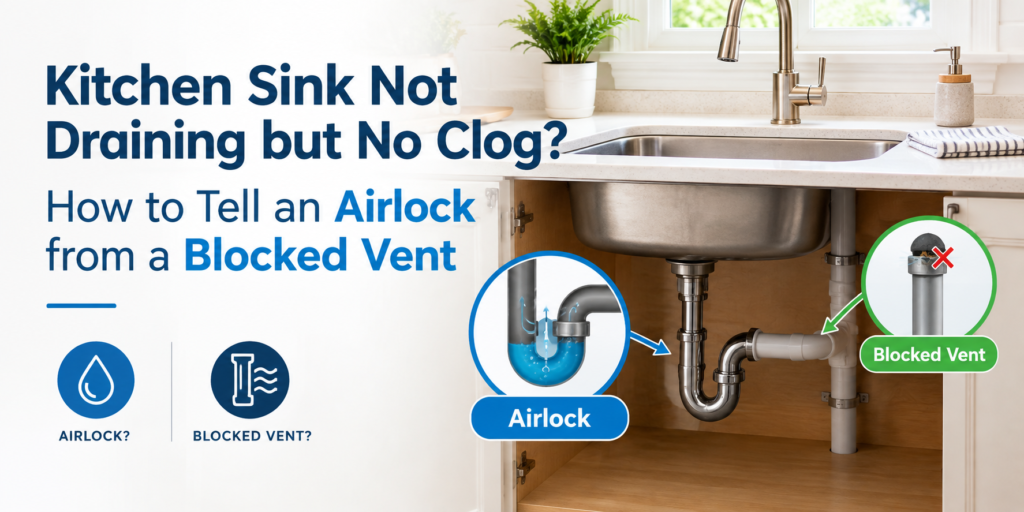
Homeowners often notice that the kitchen sink isn’t draining properly, but there is no clog. We often consider the problem is with the drain opening, which is not always true. An airlock, blocked plumbing vent, or restricted P-trap can cause slow draining or no draining at all. Common symptoms include gurgling sounds, bubbling, and brief draining before it slows again.
Understanding the difference may help you decide what you can safely check yourself before calling a professional.
Why Your Sink Won’t Drain Even When There Is No Clog
A household kitchen drain requires a clean pathway for wastewater and proper airflow. Plumbing vents allow air into the drainage system. They help wastewater move through the pipe and protect trap seals. Plumbing codes particularly require venting to control pressure differences within the drainage systems.
When the trap is restricted, air gets blocked within the line. Sometimes the vent fails to admit air, and the sink behaves as if it’s clogged. For a closer look at what leads to this, see:
Signs It is Not a Normal Clog
Observe for certain symptoms including:
- Gurgling sound or water bubbling while draining.
- Water drains normally for a few seconds, then slows gradually.
- Drains clear temporarily, then slows again.
- A nearby fixture makes sucking or bubbling sounds.
- When the kitchen sink drains, another fixture or the bathroom sink backs up.
- Multiple fixtures are slowing down at the same time.
Airlocks vs. Blocked Vent vs. Trap Clog: A Quick Comparison
| Problem | What happens | Common clues |
| Airlock | Trapped air interferes with wastewater flow. | Pressure-related symptoms and gurgling sounds. |
| Blocked vent | The drainage system cannot accurately equalise air pressure. | Multiple slow fixtures, gurgling, recurring slow drainage. |
| Trap clog | Debris restricts the P-trap underneath the sink. | One fixture affected, stopped drainage and debris near the trap. |
| Blockage within the main drain | The restriction develops farther downstream. | Multiple fixture backing up or draining gradually. |
The blocked vent does not signify the pipe is completely sealed. A partial restriction can still affect the drainage system. The vent system provides an air path that supports proper drainage.
How a Clogged Drain Vent Causes Slow Drains
A kitchen sink drainage system needs a place for air to enter as wastewater moves through the pipe. A blocked vent can increase pressure and cause issues within the drainage system.
Instead of flowing freely, wastewater may gurgle or bubble around the drain. You may also notice slow draining from the sink even after thoroughly cleaning the drain opening.
So, repeatedly using drain cleaner cannot solve a clogged kitchen sink vent. The problem can also be with the vent system instead of the sink drain.
How Does a Vent Pipe Get Clogged?
The plumbing vent generally extends through the roof. According to its placement and design, the opening may become obstructed through:
- Piled-up outdoor debris or leaves
- Animal or birds nests
- Small debris or dirt
- Frost during particular weather conditions
- Accumulating other materials around the vent opening
Kitchen Sink Vent Clogged: What You Will Notice
A clogged kitchen sink vent can cause more than a slow drain. There are other problems associated with this, including:
- Getting a gurgling sound from the sink
- Slow draining instead of a serious clog
- Bubbling water when other fixtures are in use.
- Persisting drainage problems even after plunging
- Getting similar symptoms from more than one fixture
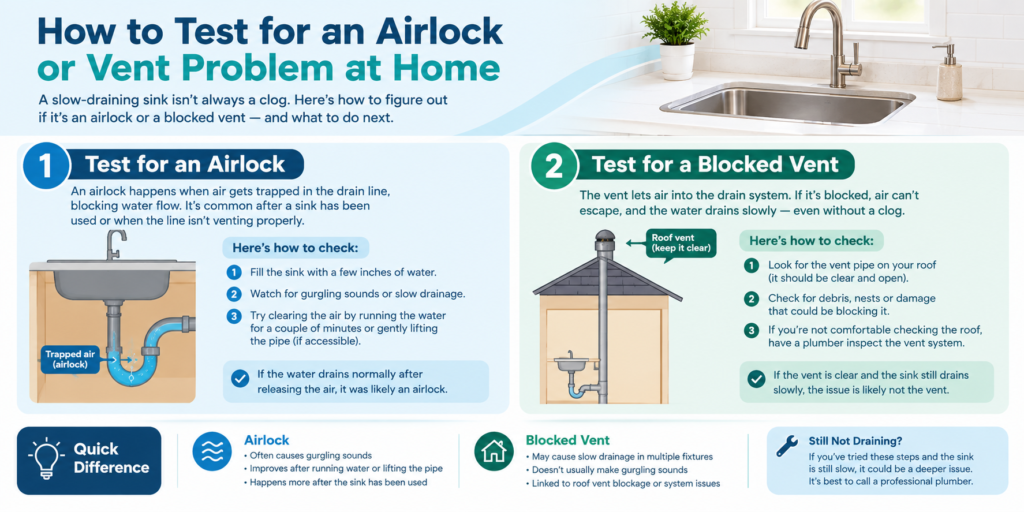
How to Test for an Airlock or Vent Problem at Home
You don’t need any special tools for this. Simple observation will help you identify the airlock or vent problem.
The Second-Fixture Test
Run water from a nearby kitchen sink and listen to the kitchen drain.
If you hear any bubbling or gurgling, you likely have a shared drainage or venting issue.
This technique is useful when a bathroom sink backs up, but the kitchen sink doesn’t clog.
The Plunger Test
You can use a standard sink plunger after removing the standing water.
Homeowners with a double kitchen sink should seal the sink before servicing the problematic one. If you notice backing up into another fixture, avoid repeated plunging.
How to Check Your Roof Vent Safely
You can check the vent opening from the ground level or from another safe location. Homeowners should not climb onto the roof from a risky area. Always call a professional for a proper diagnosis.
How to Fix an Airlock in a Kitchen Sink Drain
If a sink isn’t draining due to an airlock, check for restrictions in the drain opening or P-trap. If the obstruction is minor, running a small amount of water after cleaning can restore normal flow.
If the problem persists or returns after basic cleaning, consult a professional to resolve it.
Bathroom Sink Backing Up but No Clog: Does the Same Apply?
Yes. When a bathroom sink backs up without any clog, it can have similar problems. A partially blocked trap or branch drain can affect one fixture. If multiple fixtures drain slowly, the problem is likely drainage or venting.
Is It Your Drain or Your Water Supply?
An effective water supply system brings clean water to the faucet. The drainage system carries wastewater from the sinks. Drainage restrictions may cause backups that require proper investigation of the branch line or vent. If your issue is actually low pressure at the tap rather than slow draining, it may be an airlock in the water supply pipes rather than the drain.
When to Call a Professional?
Seek professional help when:
- The sink stops draining wastewater without any clog.
- Hearing bubbling or gurgling sound repeatedly from the sink
- Multiple fixtures are draining slowly at the same time.
- Water backing up into another sink
- Suspecting a clogged drain vent
- Unable to safely inspect the roof vent
- Backing up of wastewater or having risks of overflow
Homeowners in Springfield, MO can contact White Plumbing Company to diagnose slow-draining kitchen sinks.
FQAs
Why won’t my sink drain even though there’s no visible clog?
You might have a partially blocked P-trap, an airlock, or a problem deeper in the drain line; sometimes it’s a blocked vent, too. If you hear gurgling or bubbling, or if more than one fixture is draining slowly, the issue’s likely the vent or a shared drain.
Can a blocked vent actually stop my sink from draining?
Absolutely. Plumbing vents keep air moving through your pipes so water can drain smoothly. If a vent’s blocked, the pressure gets messed up and water won’t flow as it should.
How do I fix an airlock in my kitchen sink drain?
First, check for any obvious blockages in the drain or trap. Try plunging to see if you can clear it. If nothing changes, the real problem might be a blocked vent or something further down the line; call a pro to take a look.
Why does my sink gurgle if it’s not clogged?
Gurgling usually means air is getting trapped in your plumbing, either from a slow-moving blockage or a venting issue. If this keeps happening, especially when you use other fixtures, it’s time to have someone inspect the drainage and vent system.
How do I tell if I have an airlock or a clog?
If only one fixture is slow to drain, it’s probably a local clog. But if you hear bubbling, gurgling, or notice more than one fixture acting up, you might be dealing with a venting problem. Symptoms can overlap, so a plumber’s inspection can help you know for sure.
Read this full guide on: What Causes An Airlock in Drain Pipes? How To Fix An Airlock in Sink, Shower & Waste Pipes