
Owning a new home is exciting. From making everything reflect exactly who you are to customizing every aspect to suit your needs, a new home is everything done right. However, a new home is only as good as its foundations. Before you decide on the shapes and colors of your home, you need to plan your plumbing lines first.
A well-designed plumbing system gives you access to clean water. It also ensures efficient drainage. With proper venting, you enjoy a comfortable living. That is why building a new home requires making informed decisions. So, let us talk about plumbing in your newly built home.
What is new home plumbing?
A new home is a blank slate. Everything is built to fulfill your needs. So, new home plumbing is all about the complete installation of water supply lines, drainage systems, vent pipes, water heaters, and plumbing fixtures in a newly constructed home.
New home plumbing is a professional service to elevate the standard of living. It helps ensure consistent water pressure, proper drainage, and efficient water use.
Why do I need plumbing for new construction?
Planning and plumbing are two sides of the same coin. You need plumbing for a new build because it helps in:
- Water supply routine
- Drainage and sewer connections
- Water heater location
- Fixture placement
- Future maintenance accessibility
When you choose professionals to manage your plumbing in your new house, it’s all done according to local building codes. They bury these pipes underground so your foundation is best for your newly built home.
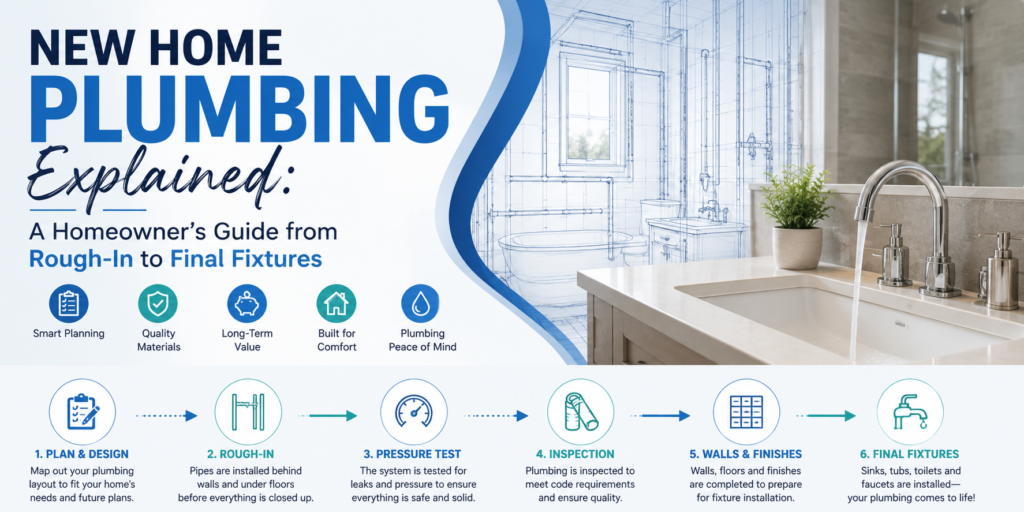
Stages of Plumbing for New Build
New home plumbing has different stages. From rough-in to final fixtures, there is a system for installing a plumbing system. Let’s understand what goes into plumbing in a new construction.
- Plumbing Rough-In
The first step in installing plumbing in new construction is the rough-in stage. It is the most important stage of the construction. In this stage, plumbers install:
- Hot and cold water supply pipes
- Drain pipes
- Vent stacks
- Bathtub plumbing
- Shower plumbing
- Toilet drains
- Washing machine connections
- Outdoor hose bibs
This is the stage where experts see that everything is laid out according to the rules, regulations, and the plan.
- Pressure Testing and Inspection
After the initial installation, experts inspect and test the plumbing system. During this, inspectors check for:
- Water leaks
- Pipe sizes
- Drainage slopes
- Secure pipe supports
- Proper venting
All these checks ensure that the plumbing lines can safely handle the water pressure without any problems.
- Installing the Water Heater
After the basic plumbing is installed and approved, installing the water heater is the next step. Homeowners usually choose between:
- Traditional tank water heaters
These water heaters have a lower initial cost. They are reliable and suitable for most families.
- Tankless water heaters
These systems heat water only when needed. They are energy efficient and have a space-saving design. They also have a longer lifespan.
- Final Plumbing Fixtures
At this stage, plumbing experts install the visible fixtures so the entire system becomes fully operational. It includes installing:
- Kitchen sink
- Bathroom sink
- Toilets
- Showers
- Bathtubs
- Faucets
- Garbage disposal
- Dishwasher connections
- Washing machine hookups
- Water filtration systems
After this stage, your home has a fully functional plumbing system.
Read a comprehensive guide on “Understanding the Three Stages of New Construction Plumbing“
A Walkthrough of Your New Home
After all of the plumbing installation is finished and approved, professionals walk you through the location of the essentials in case of emergencies. You will take note of the locations and the controls of:
- Main water shut-off valve
- Water heater controls
- Sewer cleanout
- Outdoor hose connections
- Emergency shut-off valves
As a homeowner, it is important to know these locations to save time and avoid mishaps.
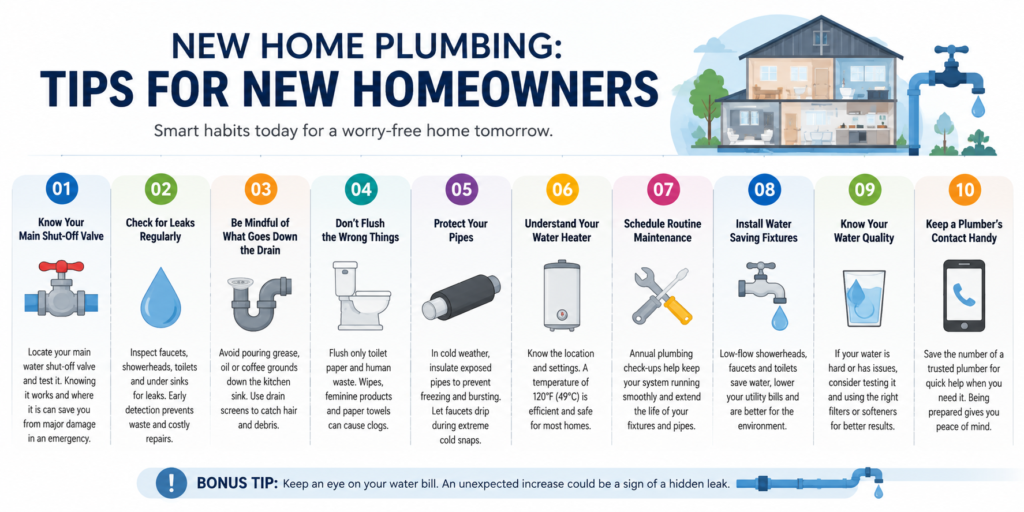
Tips for New Homeowners
As new homeowners, you are already over the moon. However, this excitement also brings on added responsibilities. Let us give you tips on how to avoid unnecessary plumbing expenses.
- Avoid flushing wipes, paper towels, or sanitary products
- Do not pour grease or oil down the kitchen drains
- Clean drain strainers regularly
- Check exposed plumbing for leaks periodically
- Address small leaks before they become major repairs
- Know the location of the main water shut-off valve
When you conduct routine maintenance of your plumbing system, you increase its longevity and avoid unexpected expenses.
The Essentials of a New Home: The Plumbing System
The plumbing system works behind the walls and underground so your home has a smooth-flowing water supply and drainage. You need expert knowledge and experience to install your plumbing system. They understand the plumbing stages and can build you a plan custom to your home.
A properly planned plumbing system in a new home is essential. You get the benefit of a dependable water supply, efficient drainage, and a long-lasting plumbing system. Plumbing experts align and install the pipes. They also inspect and carry out any fixes, if required, after the installation. With expert help, you, as a new homeowner, can have peace of mind knowing your plumbing system is fully functional.
Frequently Asked Questions
What is a plumbing rough-in phase?
A rough-in phase is the first step in setting up the plumbing lines. It is set up before the insulation, drywall, or flooring of the home. It is generally installed underground or in-wall.
Are the pipes tested?
Yes, professional plumbers ensure they use high-grade pipes for your plumbing lines. They also run tests on the lines to catch leaks before the flooring is done and the walls are closed.
What kind of pipes are used?
Professional plumbers use PEX or copper pipes for the water supply. For the drainage system, they go for PVC or ABS pipes because these kinds handle waste well.
How are leaks prevented after the final fixtures are added?
To prevent post-installation leaks, plumbers use braided stainless steel supply lines. These lines don’t crack easily under vibration. They also install individual shut-off valves for quick isolation. After installing these high-grade lines, they run a live water test to check for leaks.
Also Read: “What Causes An Airlock in Drain Pipes? How To Fix An Airlock in Sink, Shower & Waste Pipes“